“The true sign of intelligence is not knowledge but imagination,” as attributed to Albert Einstein. Tracing back to the evolution of art and culture—historical and archaeological evidence suggests that the practice of Chhath Puja in the eastern region of India, particularly Bihar, dates back more than 10,000 years. Chhath is also mentioned in Vedic literature, and in the great epics Ramayana and Mahabharata, indicating that it was among the earliest ritual practices, preceding the formation of organized religious beliefs.
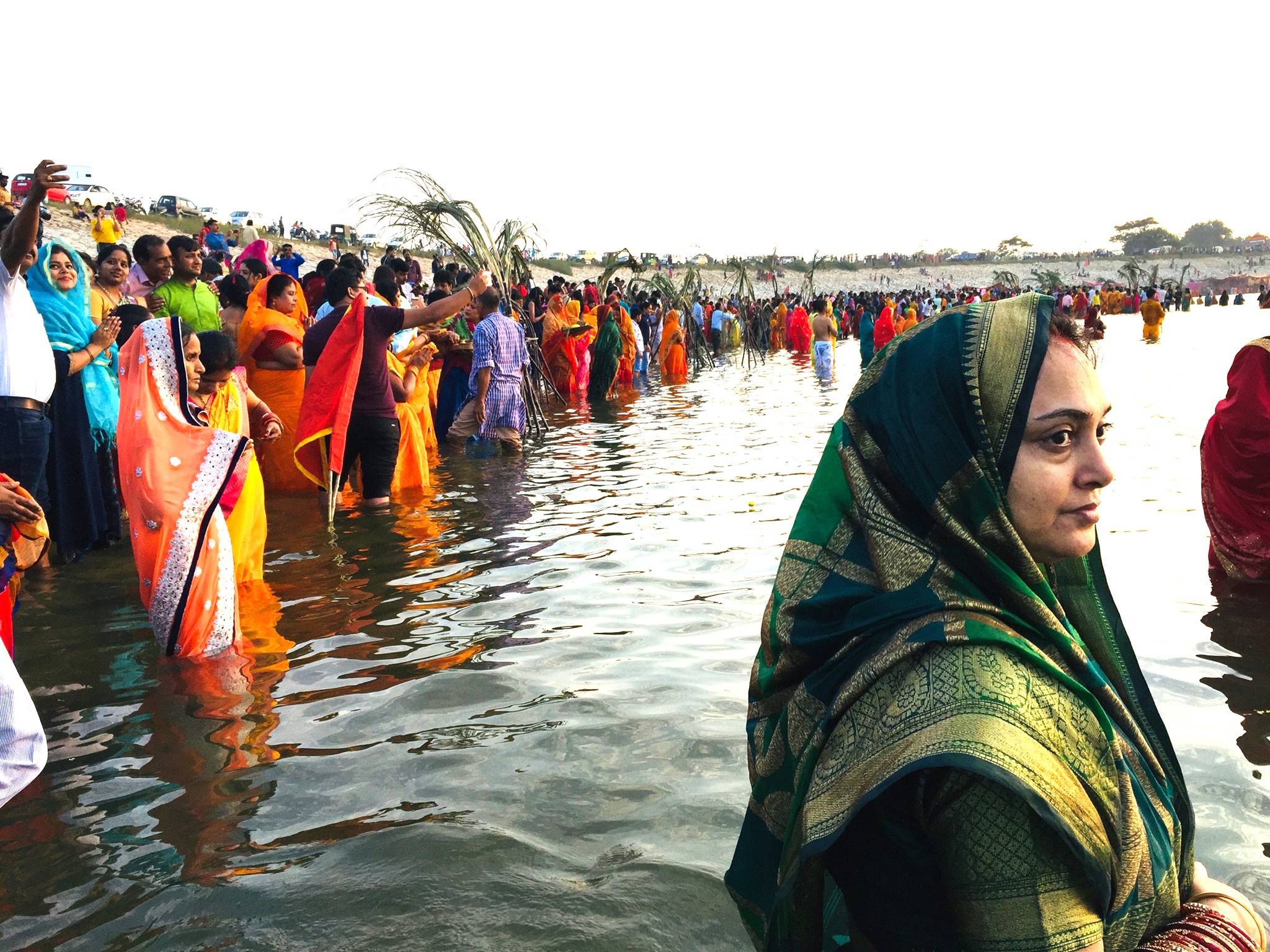
Chhath is an ancient Hindu festival dedicated to the Sun God (Surya) and Chhathi Maiya, celebrated mainly in Bihar, Jharkhand, and eastern Uttar Pradesh. It involves fasting, holy bathing, and offering prayers to the setting and rising sun for health, prosperity, and well-being. Devotees stand in rivers or ponds to make offerings, symbolizing gratitude to nature and the life-sustaining energy of the Sun.
Let’s explore the evolution of the ritual of Chhath from a scientific and holistic perspective, it stands as one of the finest and purest forms of human expression, embodying the spirit of living in harmony with nature and nurturing all forms of life, including flora and fauna.
The evolution of culture is relatively recent in the vast timeline of Earth’s formation and development, and it can be understood through the following distinct phases:
A. The five elements in the evolution of life refer to the key stages and factors that contributed to life’s origin and development on Earth:
- Formation of Earth – About 4.5 billion years ago, Earth formed with conditions suitable for life.
- Chemical Evolution – Simple molecules combined to form complex organic compounds.
- Origin of Cells – The first living cells (prokaryotes) emerged from organic matter.
- Multicellularity – Single-celled organisms evolved into complex multicellular life forms.
- Adaptation and Diversification – Through natural selection and mutation, species evolved, leading to the vast biodiversity seen toda
B. The five elements of evolution generally refer to the key mechanisms that drive evolutionary change in living organisms. They are:
- Mutation – Random changes in DNA that introduce new genetic variations.
- Gene Flow – Movement of genes between populations through migration or interbreeding.
- Genetic Drift – Random changes in gene frequencies, especially in small populations.
- Natural Selection – A process where advantageous traits become more common over generations.
- Non-random Mating – Preference in mate selection that affects which genes are passed on.
C. The five essential elements that led to the creation and sustenance of life are:
- Water (Jal) – The universal solvent, vital for chemical reactions and sustaining all living forms.
- Air (Vayu) – Provides oxygen and other gases necessary for respiration and energy exchange.
- Fire (Agni) – Represents energy and transformation, essential for metabolism and warmth.
- Earth (Prithvi) – Supplies minerals, nutrients, and a stable surface for life to grow.
- Space (Aakash) – Provides the environment and balance needed for all elements to interact and sustain existence.
D. The five elements of cultural evolution describe how human societies and their ways of life develop and change over time. They include:
- Language – The foundation of communication and transmission of knowledge.
- Technology – Tools and innovations that shape how people live and interact.
- Social Organization – Structures like family, community, and governance systems.
- Beliefs and Values – Shared ideas, religions, and moral codes guiding behavior.
- Art and Expression – Creative forms such as music, dance, and literature that reflect identity and emotion.
The five essential elements that led to the creation and sustenance of life were thoughtfully embraced by early humans, who evolved practices that reflected harmony with nature and relevance to all. Over the centuries, the evolution of culture became pivotal for every community and tribe. Isn’t it fascinating how each group developed its own unique language, technological understanding, social organization, beliefs and values, and artistic expressions? In this context, Chhath stands as an eternal tradition — so deeply woven into the social fabric that, beyond religious boundaries, people continue to appreciate, participate in, and practice it. It conveys a timeless message of universal well-being and harmony with all forms of life, both flora and fauna.
The Government of India is also actively pursuing the nomination of Chhath Puja for inclusion in UNESCO’s Intangible Cultural Heritage (ICH) list, with a multinational nomination submitted for the 2026–27 cycle. This initiative aims to secure global recognition for the festival’s deep cultural, ecological, and spiritual significance. The process highlights Chhath’s message of harmony between humans and nature, as well as its inclusive traditions that transcend religious and regional boundaries. India has also engaged in collaborations and discussions with other countries to strengthen and support this nomination, underscoring Chhath’s universal values of sustainability, gratitude, and collective well-being.
Leave a Reply